
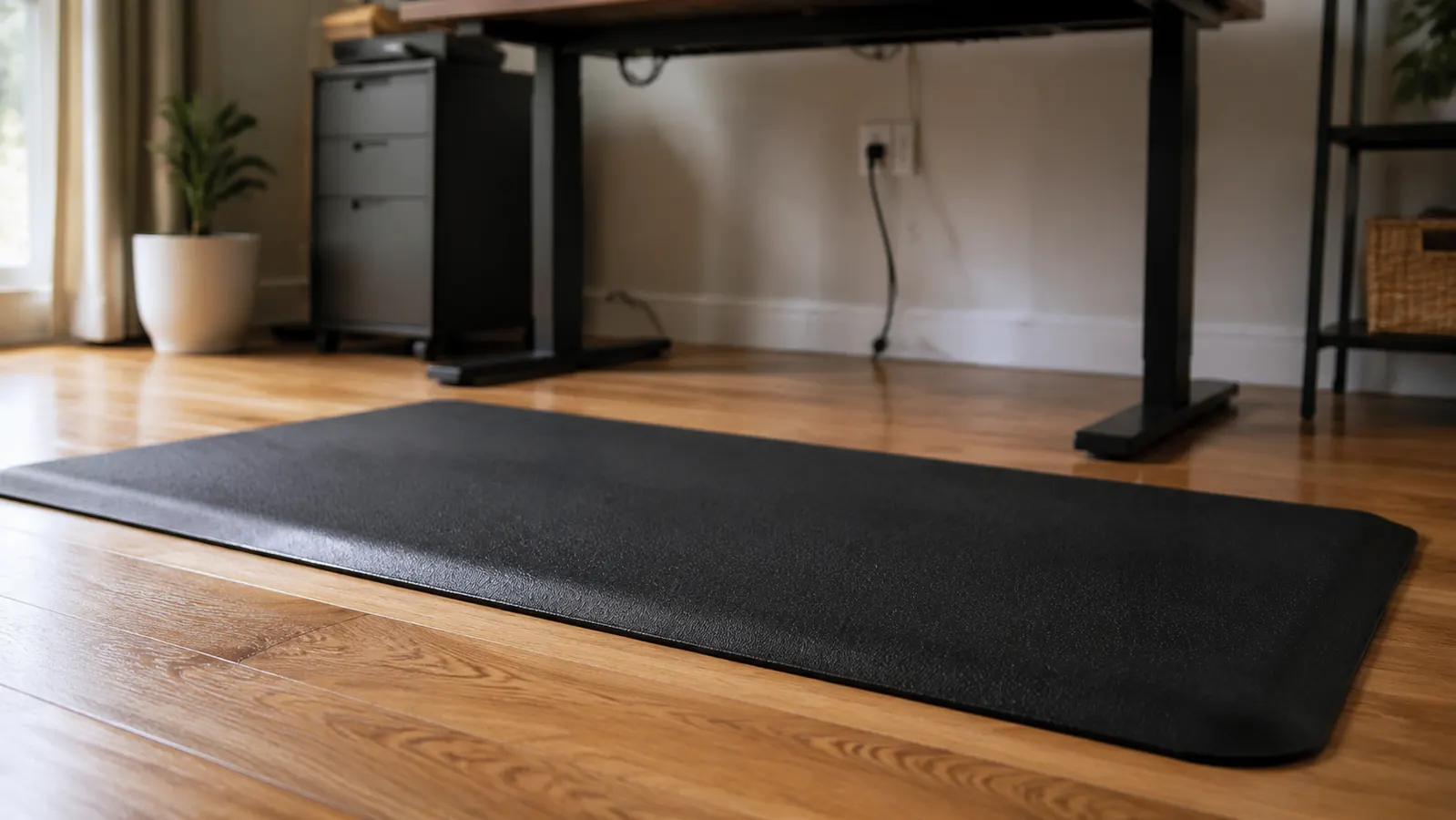
I almost returned the ComfiLife Anti-Fatigue Mat on day two. Not because it did not work. Because I unboxed it in my small 10 x 10 home office, put it down, and spent the next three days convinced something in the room had gone bad. That chemical foam smell is real, it is stronger than any review prepares you for, and if your home office does not have a window you leave open, you are going to have a problem for longer than a week.
I kept it. I am glad I did. The ComfiLife mat is genuinely one of the better anti-fatigue mats you can buy at this price, and after months of daily use I still use it every workday. But there are at least five things I wish someone had told me before I bought it. This review covers all of them.
The Quick Verdict
A well-built mat that does what it promises, but with real-world caveats around smell, edge wear, and fit that the listing glosses over. Right buyer: yes. Wrong buyer: genuinely the wrong product.
Amazon Check Today's Price →It is worth buying. But read the next five minutes first so you are not surprised.
The ComfiLife mat is 3/4 inch thick, non-slip, and rated 4.8 stars by over 40,000 buyers. It works. The caveats below will help you decide whether it works for your specific situation before you click buy.
Amazon Check Today's Price on Amazon →The Smell Is Worse Than You Think, Especially in Small Rooms
Every review mentions the off-gassing smell. None of them mention how bad it gets in a small enclosed space. The foam in this mat is dense polyurethane, and when it is brand new it releases VOCs the same way new car interiors, foam pillows, and furniture do. In a large well-ventilated room, this fades in a few days. In a spare bedroom turned home office with the door closed, it can linger for ten days to two weeks.
My office is 10 by 10 feet with one window I keep cracked in summer but close in cooler months. I unboxed the mat in October. The smell was strong enough that I could not concentrate for the first two work sessions. I ended up moving the mat to the garage for 48 hours to off-gas, then brought it back in. After that, the smell was negligible within three more days.
If your home office is smaller than 12 by 12 feet, or you work in a basement or interior room with no natural airflow, do not unbox the mat and immediately put it to work. Unbox it outside or in a garage, leave it flat for two to three days, then bring it in. Skipping that step is the source of most one-star reviews this product has ever gotten.

How I Have Used It, and Why That Context Matters
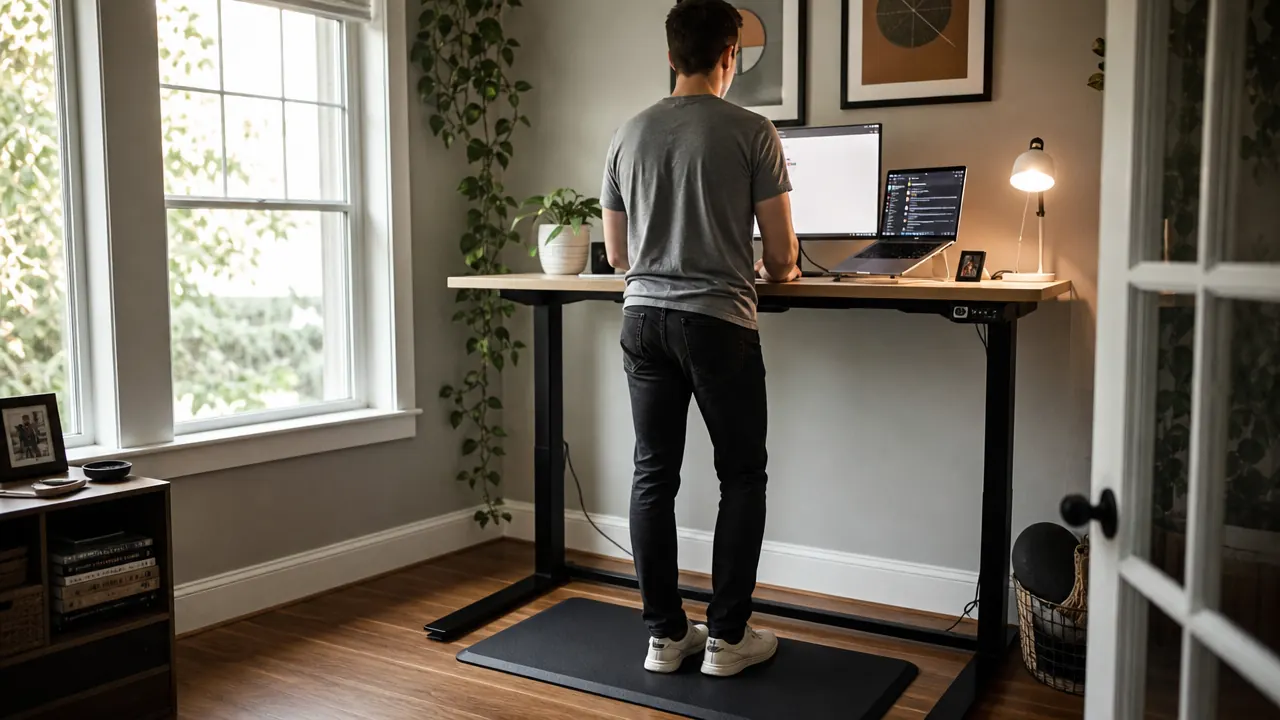
I work from home full time doing copywriting and client calls. I stand at my desk for two to four hour blocks most days, sometimes more when I am deep in a project. My standing desk is on hardwood floors in a spare bedroom. I weigh 195 pounds and stand mostly in one spot, occasionally shifting weight or walking in place when on calls.
That context matters because this mat behaves differently for different people. A 150-pound person who stands for 90-minute blocks on hardwood will have a completely different experience than a 230-pound person who stands for six hours a day. The mat is not rated by weight. That omission from the product listing is one of the honest gaps I want to fill here.
Thickness Over Time: What Nobody Tells Heavy Users
The 3/4 inch foam starts firm. After consistent use, the center of the mat, the zone directly under your primary standing position, compresses. For most people at a normal build, this compression is barely measurable over many months. But if you are over 220 pounds, or if you stand for more than four hours a day in the same spot, the compression is meaningful within three to four months.
A neighbor of mine, Marcus, 6 foot 2 and 245 pounds, bought the same mat after I recommended it. Within four months he noticed the center had compressed enough that the mat felt noticeably thinner underfoot than when he started. It still provided cushioning, but the original 3/4 inch depth had reduced. He ended up moving to the 1 inch version, which is a separate product, and has been satisfied with that.
If you are over 200 pounds and plan to stand for long daily sessions, consider the 1 inch option from the start. The standard 3/4 inch will serve lighter users well for a long time, but for heavier users it is the wrong starting point. The product listing does not break this out by user weight. Now you know.
If you are over 200 pounds and plan to stand for long daily sessions, the 3/4 inch option may compress faster than the listing implies. The 1 inch version exists for a reason.

Edge Curl: The One Side That Does Not Hold Up
The ComfiLife mat has beveled edges, meaning the perimeter tapers down to the floor rather than having a sharp vertical drop-off. This is a smart design. It prevents the mat from being a tripping hazard when you step on and off. In general, the beveling holds up well.
But there is one edge that takes more abuse than the others: the edge you step over when moving between standing and sitting positions. For me, that is the front edge. Every time I lower the desk and sit down, I step forward off that edge. Every time I stand again, I step back onto it. That edge, over time, develops a subtle outward curl. It does not crack. It does not become a tripping hazard. But it is clearly more compressed and has a slight curl compared to the other three edges.
This is not a dealbreaker. It is a wear pattern. It did not affect function for me. But I have seen it called out in Amazon reviews as a defect when it is actually just normal use on the highest-traffic edge. Knowing it will happen ahead of time means you will not be alarmed when it does.
Cleaning Reality: The Pet Owner Version
The surface of this mat is easy to clean. A damp cloth handles spills and general grime without any trouble. That part of the marketing is accurate.
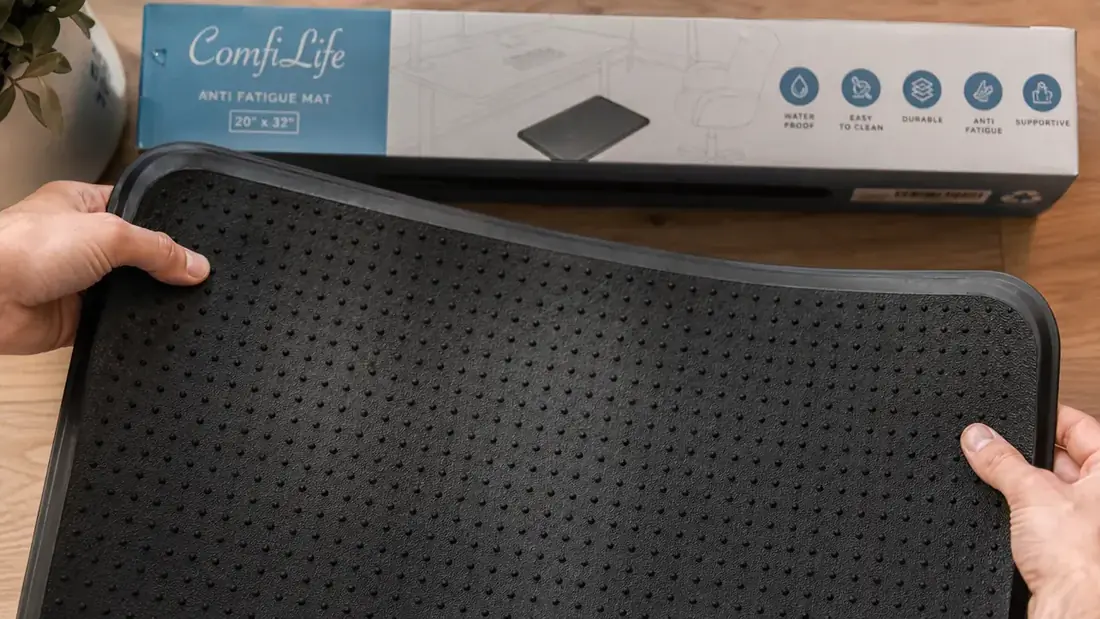
The underside is a different story. The non-slip rubber bottom has a textured grip pattern that is extremely effective at staying in place on hardwood or tile. It is equally effective at trapping pet hair, dust, and debris. I have a medium-shedding dog named Rufus, a five-year-old beagle mix, and the underside of this mat collects his hair like a lint trap after a week of sitting in place.
Every seven to ten days I flip the mat, vacuum or wipe the underside, and put it back. If I skip this for more than two weeks, the accumulated debris starts to scratch the hardwood floor slightly when the mat is shifted. That is a real problem for people with wood floors they care about.
If you have pets that shed, build the flip-and-vacuum step into your weekly cleaning routine from day one. It adds about three minutes. If you do not do it, the mat will eventually drag debris across your floor. Nothing in the product description warns you about this.
Is It Better Than a Cheaper Mat?
This is the question most buyers are actually asking when they land on this product. There are standing mats available for $20 to $25. The ComfiLife costs about twice that. Is the difference real or just marketing?
I tried a cheaper 1/2 inch foam mat before buying this one. The difference is noticeable. The cheaper mat felt soft for the first 15 minutes and then started to feel like standing on slightly cushioned concrete as my feet settled into it. The firmer, denser foam in the ComfiLife maintains its support throughout a standing session. The cheaper mat also curled at the edges much more aggressively, to the point where two corners lifted off the floor and I kept catching them with my feet.
For home office use with a standing desk, the extra cost is worth it. The edge quality and foam density are meaningfully better. That said, if you are experimenting with standing for the first time and are not sure you will stick with it, a $22 mat is a reasonable way to test the concept before committing to a better one.
What I Liked
- Foam density holds up through long standing sessions without going flat in one sitting
- Non-slip bottom does not move on hardwood or tile, no accessories needed
- Surface cleans up in under a minute with a damp cloth
- Beveled edges prevent tripping and mostly hold their shape over time
- Meaningfully better foam quality than comparable cheaper mats
- Available in multiple sizes, including larger options for people who shift stance
Where It Falls Short
- Off-gassing smell is strong in small or enclosed rooms and can last 10 to 14 days without ventilation
- Foam compression accelerates for users over 200 pounds, 3/4 inch may not be enough long-term
- Primary step-on/step-off edge develops a noticeable outward curl over months of daily use
- Rubber underside traps pet hair and debris aggressively, requires weekly cleaning if you have pets
- Flat surface gives no encouragement to shift foot position, which some ergonomists say matters for circulation
The Size Question People Get Wrong
The most popular size is 20 by 39 inches. That fits most standing desk setups and feels like the right choice based on the listing photos. But there is a real chance you will wish you had bought the larger 24 by 70 inch version.
The 20 by 39 size works well if you stand in one relatively fixed spot directly in front of your keyboard. If you pace slightly, shift between two monitors at different positions, or walk in place during calls, you will regularly find yourself stepping off the mat. The larger size gives you room to move without losing the cushioning benefit. I bought the smaller size first and upgraded. Save yourself the round trip and think about your movement habits before choosing.
For more on choosing the right mat size and pairing it with good standing habits, the full guide to reducing foot pain at a standing desk covers this in detail: How to Reduce Foot Pain at a Standing Desk Using the Right Mat and Posture.
Who This Mat Is Not For
Standing on carpet. The non-slip bottom is designed for hard floors. On carpet it still provides some cushioning benefit, but the anti-fatigue purpose is reduced because carpet already softens the floor. You are also adding a tripping risk because the mat perimeter does not blend into carpet the way it does into flat hard floors. Skip it if your desk is on carpet.
People with diagnosed plantar fasciitis or heel spurs. This mat helps. It is not treatment. If you have a medical-level foot condition that is worsening from standing, this mat will reduce discomfort but will not fix the underlying problem. Orthotics and medical advice should come first. The mat is a complement, not a substitute.
People who stand fewer than 30 minutes a day. The cushioning benefit compounds over time during a standing session. If you are only standing for short stretches, hardwood floors are uncomfortable but survivable without a mat, and the money might do more good elsewhere in your setup. I would put a better desk lamp or a monitor riser ahead of a mat if your standing time is minimal. For standing desk setup priorities in general, this guide is worth a read: How to Set Up a Home Office Standing Desk the Right Way.
Who This Mat Is For
If you have a standing desk, stand on hardwood or tile, weigh under 210 pounds, and stand for 60 to 150 minutes per session, this mat is one of the most cost-effective upgrades you can make to a home office setup. It is not flashy. It does not do anything except make standing noticeably more comfortable. That turns out to be exactly what you need.
If you are buying it for the first time and are new to standing desk work, you will likely be surprised by how much it extends your comfortable standing time. New standing desk users often abandon standing within a few weeks because the physical discomfort feels like the standing itself is wrong, when the actual problem is the floor surface. Getting this mat right from the start makes a real difference in whether you actually build the standing habit.
If you want to compare this mat head to head against the Topo by Ergodriven, which takes a fundamentally different design approach with raised terrain features, that comparison is here: ComfiLife vs Topo by Ergodriven: Which Anti-Fatigue Mat Is Worth the Money?. And for a look at what 10 specific anti-fatigue benefits actually look like in practice, this piece breaks it down: 10 Reasons a Standing Desk Mat Reduces Fatigue and Keeps You on Your Feet Longer.
For the right buyer, the ComfiLife is still the best value mat at this price. For the wrong one, it is the wrong product entirely.
Over 40,000 Amazon buyers have rated it 4.8 stars. If the caveats above do not apply to your situation, it is likely the right call. Check the current price and available sizes below.
Amazon Check Today's Price on Amazon →