
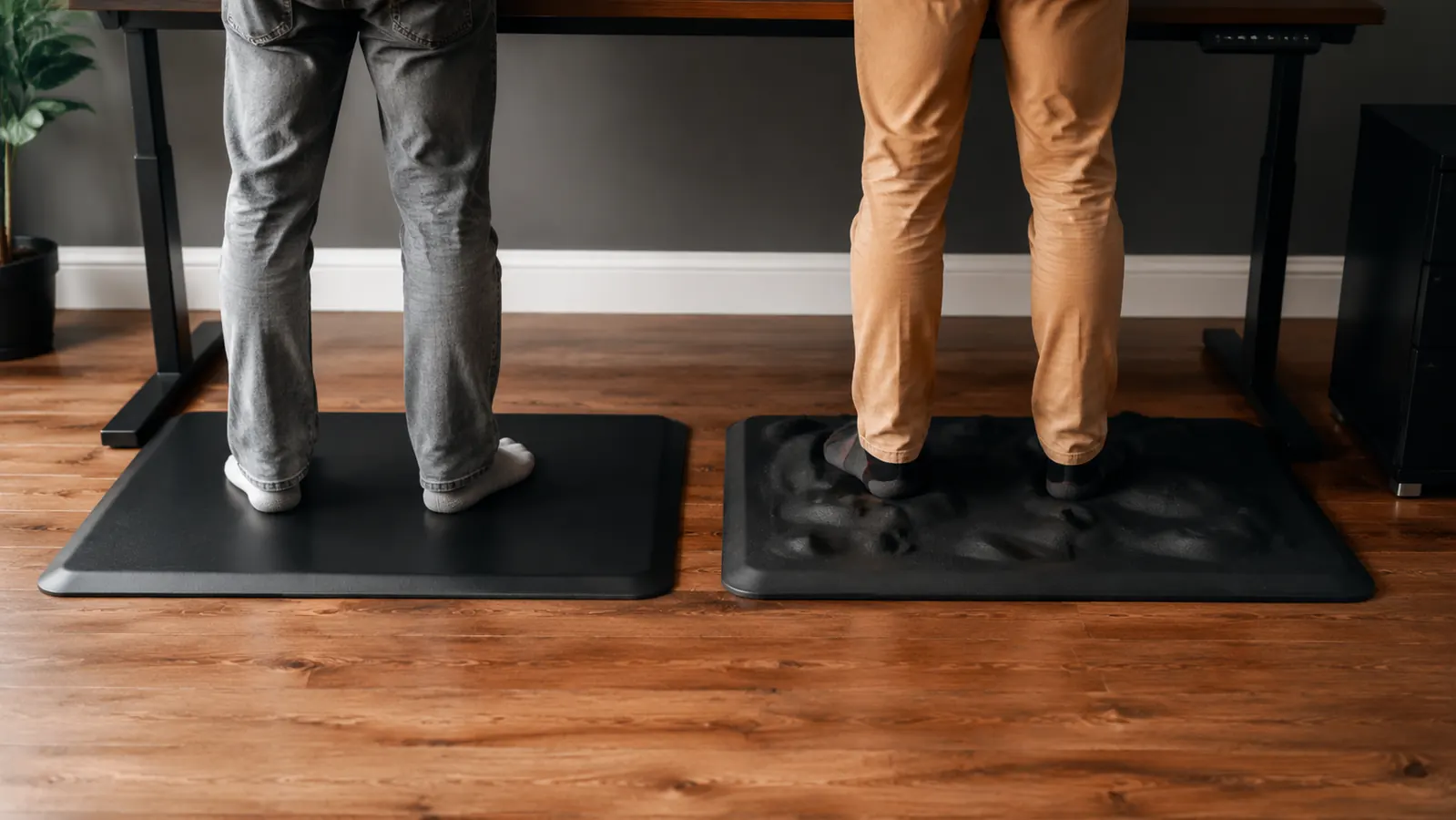
Here is the short answer: if you are setting up a standing desk in a home office and want a mat that reduces foot and leg fatigue without overthinking it, the ComfiLife is the one to buy. It is cheaper, more durable, works for any body type, and has 41,000 reviews from real people who use it exactly the way you plan to.
The Topo by Ergodriven is a genuinely interesting design. The raised terrain shapes are supposed to encourage subtle weight shifts while you stand, and for some people they work great. But at roughly twice the price, with a learning curve, and with real complaints about the terrain ridges becoming uncomfortable during long sessions, it is not the safe bet for most buyers. This comparison will tell you exactly who belongs in each camp.
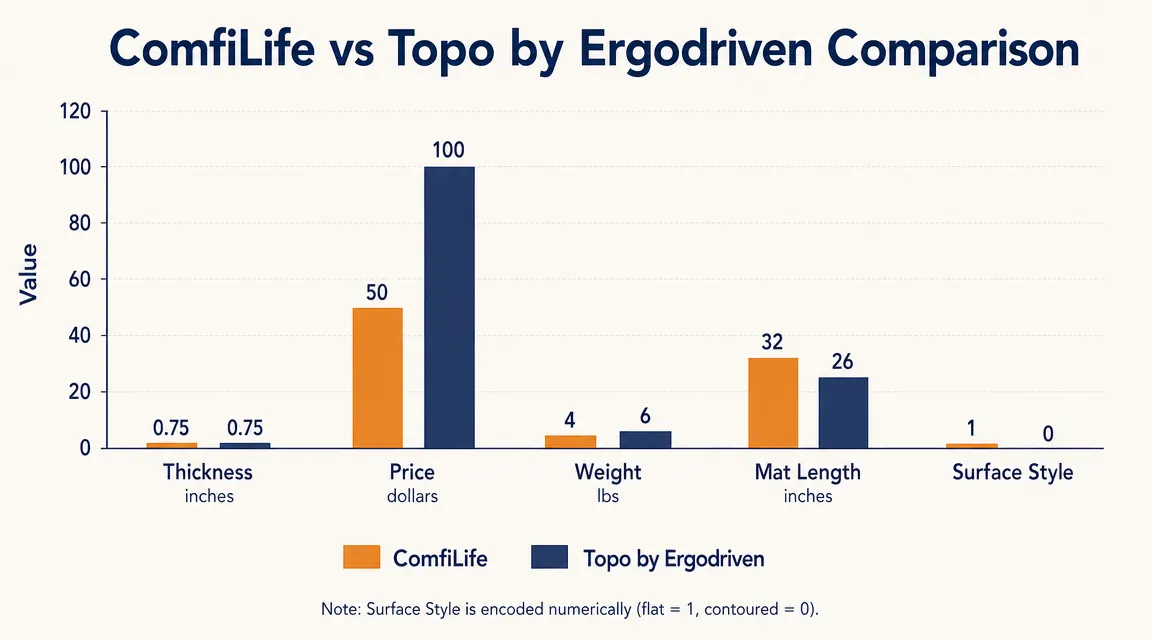
| ComfiLife Anti-Fatigue Mat | Topo by Ergodriven | |
|---|---|---|
| Price | ~$50 | ~$99 |
| Thickness | 3/4 inch (19mm) flat foam | 3/4 inch base + raised terrain peaks up to 1 inch |
| Surface Style | Flat, uniform cushion across entire mat | Contoured terrain with raised arch, toe ridge, and heel bar |
| Size Options | 20x39in, 24x36in, 20x72in, 18x30in | 29x26in (one size only) |
| Non-Slip Bottom | Yes, textured rubber backing | Yes, rubber backing |
| Amazon Rating | 4.8 stars / 41,667 reviews | 4.3 stars / ~8,000 reviews |
| Works with Standing Shoes | Yes, suits bare feet or any footwear | Best barefoot or in thin soles; terrain can feel odd with thick soles |
| Edge Curl Over Time | Minimal with beveled ramp edges | Flat base edges hold well |
| Durability Reports | Holds shape after 1+ year of daily use in most reviews | Terrain peaks can soften with heavy daily use over time |
Sore feet by 2pm? This is the mat 41,000 remote workers use to fix that.
The ComfiLife 3/4-inch anti-fatigue mat is the top-rated standing desk mat on Amazon for good reason. It cushions the entire surface evenly, stays put on hardwood or tile, and holds its shape after a year of daily use.
Amazon Check Today's Price on Amazon →Where the ComfiLife Wins
The ComfiLife wins on simplicity, and simplicity matters more than most buyers expect. When you step onto a flat, evenly cushioned mat, your feet and legs do the micro-adjustments naturally. You shift weight from heel to ball, you roll your ankles slightly, you lean forward when focusing on the screen. None of that requires a raised terrain feature to prompt it. Your body handles it automatically when the standing surface has the right give.
The 3/4-inch thickness is the real story here. Thin mats, including a lot of the under-$30 options on Amazon, compress within a few months and turn into hard foam pancakes that do almost nothing. The ComfiLife holds that thickness. Look through the reviews sorted by recent: people writing in at 18 months and two years are not complaining about compression. That is not luck. The density of the foam is what separates a mat that lasts from one that flatlines.
Price is also a real factor. At around $50, the ComfiLife lets you buy two mats (one for your desk, one for the kitchen, or one as a backup) for less than you would pay for a single Topo. For a first-time standing desk setup, that flexibility matters.

Where the Topo by Ergodriven Wins
The Topo deserves credit for a real design insight. The raised central arch, the toe ridge along the front edge, and the heel bar at the back are not gimmicks. They were designed by ergonomics-minded engineers to give your feet places to perch, shift, and engage throughout the day. If you have ever used a Topo at a shared standing desk and liked it, that feeling is legit. The terrain features work for a specific type of stander.
That type is usually someone who stands barefoot or in very thin-soled shoes, who moves around a lot while standing rather than staying in one spot, and who wants something that actively encourages fidgeting and position changes. Some users, particularly those with plantar fasciitis or arch problems, find the raised arch genuinely relieving. The Topo is not a bad product. It is a product with a narrower ideal-fit window.
The ComfiLife does not try to teach you how to stand. It just makes standing hurt less. For most home office setups, that is exactly the right approach.
The Terrain Feature Question: Does it Actually Help?
This is the core of the comparison. Ergodriven markets the Topo's terrain as a way to keep your muscles engaged and reduce fatigue through constant micro-movement. The idea is that standing on a flat surface lets you go static, while terrain forces your body to stay active. It is a reasonable hypothesis.
The problem is that for a lot of buyers, the terrain features become distracting rather than helpful after the first week. The raised arch hits in different spots depending on how you stand and what shoes you are wearing. The toe ridge, which works great when you are intentionally stretching your calves against it, can feel annoying when you just want to stand and type. Several hundred Topo reviews describe exactly this: a mat that felt great in the store or in the first few days, but that they stopped using because the terrain got in the way of just standing and working.
The ComfiLife avoids this entirely. A flat, thick, cushioned surface lets you move naturally without any of the features creating friction. You are not fighting the mat. You are just standing on something that takes pressure off your joints.
Size and Placement: Another Win for ComfiLife
The Topo comes in one size: 29 by 26 inches. That is wide but not particularly deep front-to-back, which works fine if you stand in place. If you pace while on calls, step back frequently to look at the screen, or have a wide stance, you will be stepping off the Topo constantly. There is also a Topo Mini for smaller footprints, but it shrinks the terrain down to the point where the features lose a lot of their value.
The ComfiLife comes in four sizes, including a 20 by 72 inch runner option that works well if you have two monitors and move laterally across a wider desk setup. That flexibility alone is worth something when you are configuring a home office where every inch of floor space is planned. If you are also considering a standing desk, our guide on how to set up a home office standing desk the right way covers mat placement in the context of full desk ergonomics.
Durability Over Time
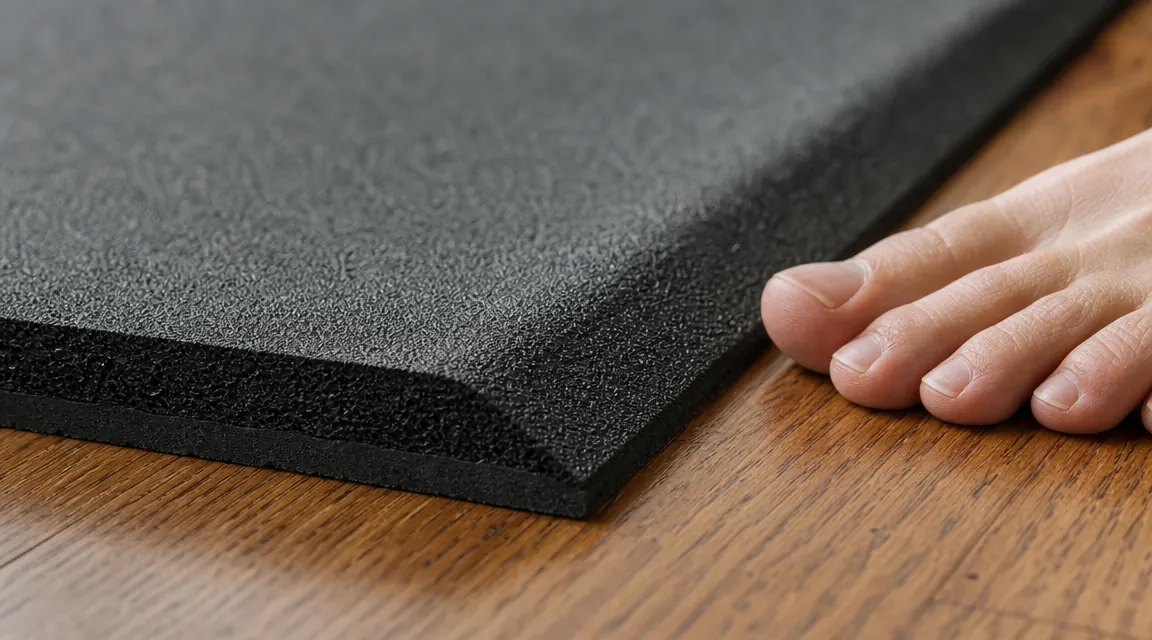
Both mats use polyurethane foam with rubber non-slip backing. At a basic materials level, they are similar. The difference shows up at the terrain peaks on the Topo. Those raised sections carry more pressure per square inch than a flat surface, which means they tend to compress faster. Reviewers who use the Topo for more than a year on a hard floor start noticing that the arch and toe ridge feel softer than they did at first. That is not a deal-breaker for everyone, but it does mean the Topo's key differentiator degrades over time.
The ComfiLife wears more evenly. Because the entire surface is uniform foam, compression happens consistently across the mat. It gradually gets a few millimeters thinner over a couple of years, but it does not develop dead spots the way terrain-feature mats can. For a long-term standing desk setup, that even wear matters. Our full long-term review covers this in detail: ComfiLife Anti-Fatigue Mat Review: One Year Standing on It Every Workday.
Who Should Buy Which
Buy the ComfiLife if you are setting up a standing desk for the first time, if you stand in shoes at your desk, if you want the most versatile size options, or if you want a mat that requires exactly zero adjustment period. It is also the right call if you are buying on a budget and want a mat that competes with anything in the $80 to $120 range. For most remote workers, hybrid professionals, and home office setups, the ComfiLife is the correct choice. If you want to understand exactly what makes standing desk mats effective, this article on 10 reasons a standing desk mat reduces fatigue is worth reading before you decide.
Buy the Topo by Ergodriven if you have used one before and liked it, if you stand barefoot or in minimalist shoes, if you already have experience with standing desks and want to deliberately engage your feet more, or if a physical therapist has specifically recommended terrain-style mats for an arch or plantar issue you are managing. It is a better-than-average mat for the right person. It is just not the right mat for most people starting a new standing desk routine.
The mat 41,000 buyers chose, and kept using a year later.
The ComfiLife 3/4-inch anti-fatigue mat works whether you stand for one hour a day or six. Flat, thick, durable, and available in four sizes. No terrain features to adjust to. Just a surface that makes standing at your desk actually comfortable.
Amazon Check Today's Price on Amazon →