
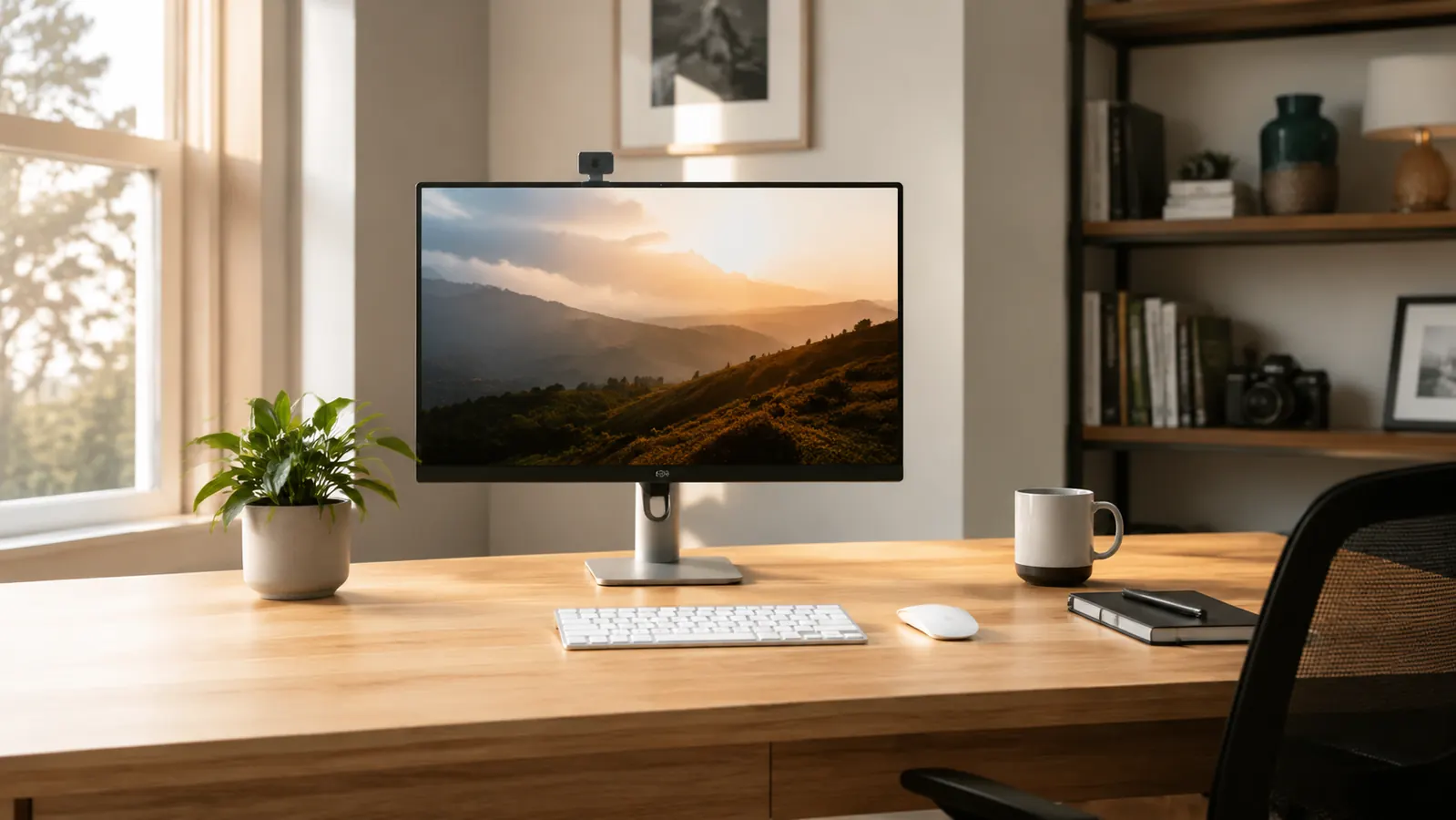
Look at your desk right now. If you count more than two cables in plain sight, that is not a focus problem or a productivity problem. It is a setup problem. And the fix takes one afternoon, costs about $30, and starts with pulling out your wired keyboard and mouse.
Cable clutter is one of those things that feels permanent until you actually deal with it. People buy velcro ties, use binder clips, tuck cords under a mat. The mess just migrates. The real answer is removing the cables from your input devices entirely, because your keyboard and mouse cables are the ones you actually see and interact with every day. Once those are gone, the desk feels different. The other cable management steps become much simpler to tackle too.
Your desk is one swap away from looking completely different
The Logitech MK270 is a wireless keyboard and mouse combo used by over 118,000 Amazon customers. It connects through a single nano receiver and runs for months on standard batteries.
Amazon Check Today's Price on Amazon →What You Need Before You Start
This guide uses the Logitech MK270 wireless keyboard and mouse combo as the recommended tool. It ships as a set, uses a single USB nano receiver for both devices, and the receiver is small enough to leave plugged in permanently without being in the way. You do not need Bluetooth on your computer. The nano receiver handles everything.
Beyond the MK270, you will need a small bag or bin for the cables you are removing, a few velcro cable ties or a cable management tray if you want to finish the job cleanly, and about 45 minutes. That is a conservative estimate. Most people finish faster.
Step 1: Take Everything Off the Desk
This is the step people skip, and it is the reason their desks never actually get clean. You cannot manage the clutter you have until you can see all of it at once. Move the monitor off to the side if you can. Pull your laptop or desktop out far enough to see all the ports. Lay everything on the floor or a table behind you.
While everything is off, wipe down the desk surface. This matters more than it sounds. A clean surface makes you more deliberate about what goes back on it. You start asking whether things actually need to be there. That mindset shift is half the work.
Take a photo of your current cable situation before you unplug anything. You will want to know which cable goes where when you reconnect. Especially if you have a monitor, speakers, or a docking station with several cables running to one machine.

Step 2: Swap Your Wired Keyboard and Mouse for the Logitech MK270
Unplug your existing wired keyboard and mouse. Set them aside. Do not throw them out yet, but move them out of arm's reach so you are not tempted to plug them back in when the setup process takes longer than thirty seconds.
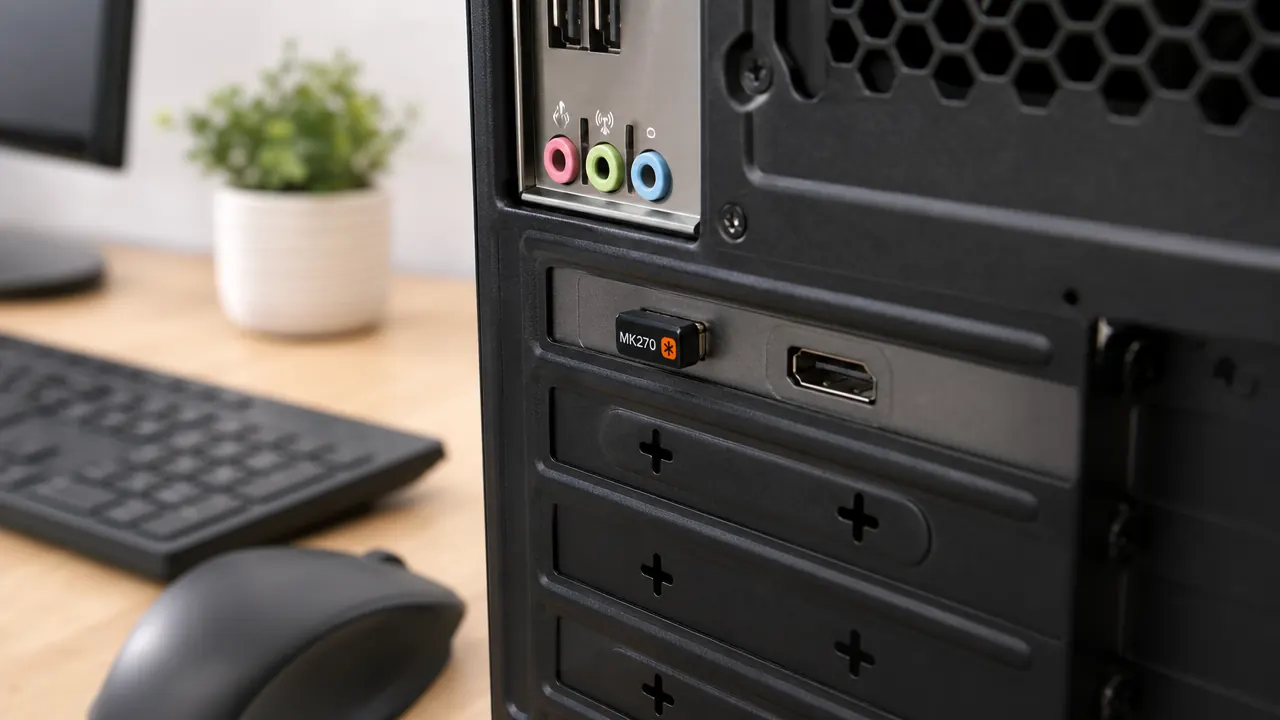
Open the MK270 box. Install the two AA batteries in the keyboard and one AA battery in the mouse. Both battery compartments are on the bottom of each device. The nano receiver is stored in a small slot inside the mouse battery compartment. Pull it out, plug it into an available USB port on your computer, and power on both devices using the on/off switches on each one.
That is it. There is no driver installation required on Windows 7 through Windows 11. The keyboard and mouse are recognized automatically. On Mac, the keyboard will work but the layout is Windows-optimized, so some shortcuts will feel slightly different. The MK270 is marketed as a Windows peripheral. Mac users who primarily type in applications will have no issues; power users who rely on specific keyboard shortcuts might want to account for that.
Position the nano receiver in a rear USB port if your machine has one. The further back the receiver, the less likely it is to get bumped or block a USB slot you use regularly. The MK270 operates at 2.4 GHz and has a range of roughly 33 feet, so distance from the receiver is not a concern in any normal home office setup.
Step 3: Identify and Label Every Remaining Cable
With the keyboard and mouse cables gone, take stock of what is left. For most home office desks, the remaining cables fall into three categories: power cables running to the wall or a power strip, display cables between your computer and monitor, and peripheral cables for things like webcams, external hard drives, and audio gear.
Label each cable before you route it. You can use small sticky labels, a label maker, or just a piece of masking tape with a marker. Write what the cable does, not what it is. Write "desk monitor" not "HDMI." Write "backup drive" not "USB." When you move the desk in six months or plug something in late at night, you will thank yourself for this.
Count how many cables are left. For a typical single-monitor setup with no extra peripherals, you should be looking at three to five cables after removing the keyboard and mouse: monitor power, monitor video, computer power, and maybe a USB hub or speaker cable. If the number is higher than that, the next step will help you think about whether some of those devices actually need to be on your desk at all.
The keyboard and mouse cables are the ones you touch and move every day. Removing them does not just reduce the count. It changes how the whole desk feels.
Step 4: Route and Secure the Cables That Remain
Now bundle the remaining cables and get them off the desk surface. There are a few approaches depending on your setup and how much you want to spend.
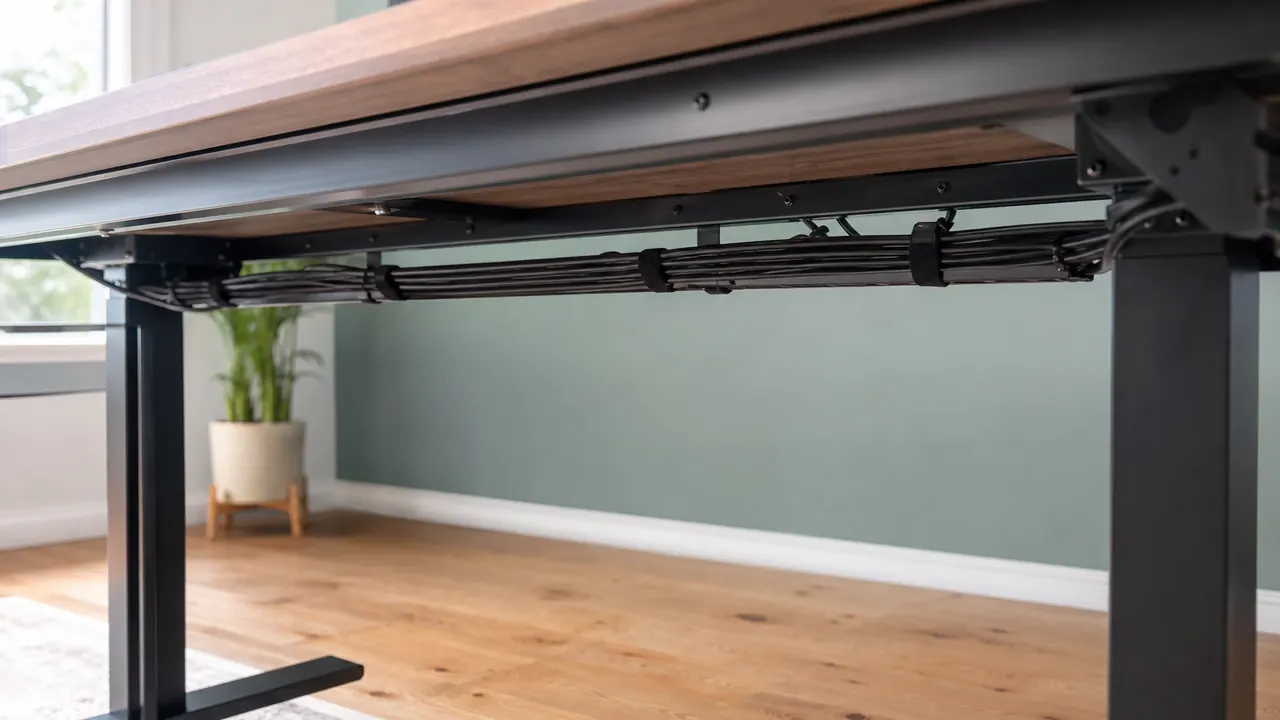
The simplest approach costs almost nothing. Gather the cables into a loose bundle running along the back edge of the desk. Secure them every eight to ten inches with velcro cable ties. Velcro is better than zip ties because you can adjust or add cables without cutting anything. Run the bundle down one desk leg and into a power strip or surge protector on the floor or mounted under the desk.
If you have a sitting desk and want to go further, a under-desk cable management tray mounts to the underside of the desk and holds your power strip plus bundled cables completely out of sight. A standing desk makes routing slightly easier because the desk frame often has channels or clips built into the legs for exactly this purpose.
The goal in this step is to get cables off the desk surface and traveling vertically, not horizontally across the top. Horizontal cable runs across a desk surface are what the eye catches. Vertical runs down a desk leg disappear completely.
Step 5: Put Only What You Use Daily Back on the Desk
This is where the discipline part comes in. Everything is on the floor or that table behind you. Before anything goes back onto the desk, ask whether you actually use it every workday. If the answer is yes, it goes back. If the answer is occasionally, find a shelf or drawer for it instead.
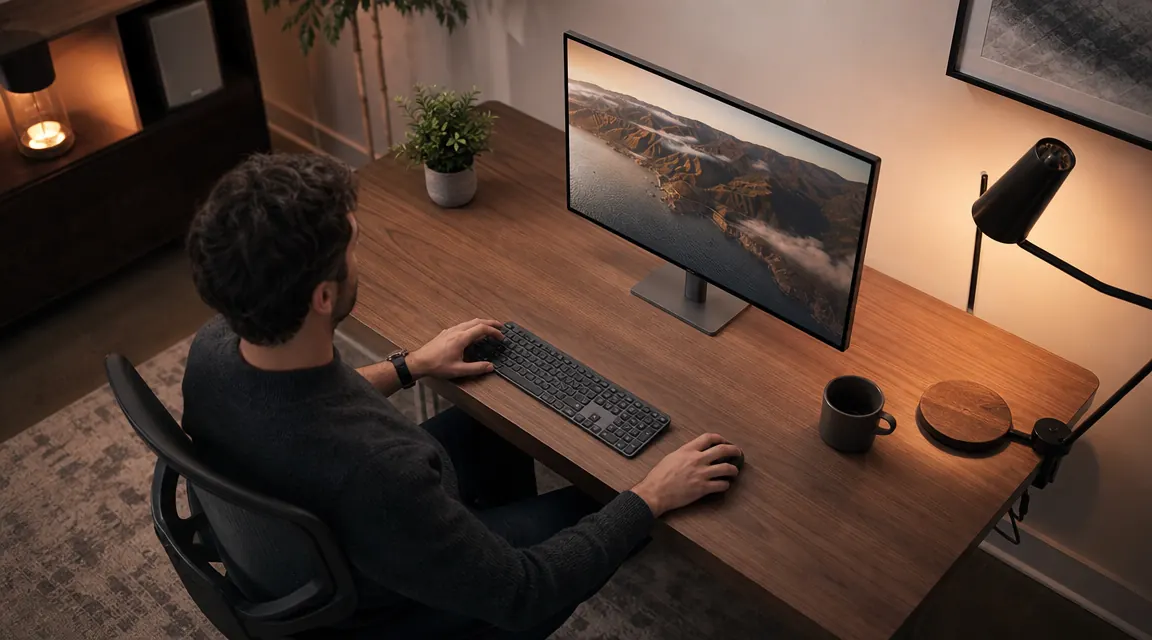
For most people, the list of daily items is shorter than expected: monitor, keyboard, mouse, a notepad or notebook, and whatever holds their coffee. That is a clean desk. Everything else is a distraction that has been rationalized as necessary.
Place the MK270 keyboard in front of your monitor, centered. Place the mouse to whichever side you use it on. Notice that there are no cables running from these two devices anywhere. No cable drag on the mouse as you move it. No keyboard cable pulling toward the USB port. The surface feels open in a way it probably has not felt in a while.
What Else Helps After the Cables Are Gone
A wireless keyboard and mouse removes the most visible source of clutter. But if you want to go further, two other upgrades have an outsized effect on how clean and functional a home office desk feels.
The first is a USB-C docking station. If you work from a laptop, a single docking station means one cable connects your laptop to your monitor, power, and any wired peripherals, instead of three or four separate cables plugged directly into the laptop. The Selore 14-in-1 USB-C docking station is one option worth looking at if this describes your setup.
The second is getting your monitor off the desk surface entirely with a monitor arm. When your monitor sits on an arm mounted to the back edge of the desk rather than on its own stand, you reclaim six to eight inches of desk depth that the stand was occupying. The cable from the monitor still exists, but it runs along the arm and down the back instead of across the desk.
Neither of these is required. The wireless keyboard and mouse swap alone makes a real visible difference. But if you find yourself wanting to keep going after Step 5, those are the two upgrades that have the biggest effect per dollar spent.
Battery Life and Maintenance to Expect
The MK270 keyboard battery life is rated at 24 months on a set of two AA batteries. The mouse is rated at 12 months on one AA. Those are Logitech's rated figures under typical use. In practice, whether you leave the devices powered on when not in use affects how closely you hit those numbers.
Both devices have on/off switches. Making it a habit to flip the switch when you close the laptop or shut down for the day extends battery life and also prevents accidental inputs. The keyboard has an auto-sleep feature that triggers after a period of inactivity even if you leave it powered on, so the rated battery life holds up reasonably well with normal use.
When it is time to replace the batteries, the compartments are accessible without any tools. AA batteries are easy to stock. This is a practical advantage over rechargeable wireless keyboards that need to be charged on a cable, which creates its own source of desk clutter when the charging cable is out.
If you are curious about how the MK270 compares to Logitech's quieter MK295 model, the MK270 vs MK295 comparison breaks down the key differences in typing noise, key feel, and who each combo is better suited for.
Who This Works Best For
This process works for anyone whose primary frustration with their desk is visual clutter and cable tangle. It is especially useful for people who have tried cable management tools before and found the results underwhelming, because removing the keyboard and mouse cables eliminates the clutter those tools were trying to hide.
The MK270 is a full-size keyboard with a standard layout, so it suits people who type for hours every day and do not want a compromised typing experience just to get wireless. It is also a good fit for anyone setting up a shared home office space or a desk that multiple people use, since wireless peripherals make the desk feel less personal and easier to hand off.
If you want more context on what daily use with the MK270 actually looks like before committing to it, the long-term MK270 review covers two years of daily use, key travel, mouse tracking, and where the combo falls short for specific use cases.
One $30 swap that clears the cables you look at all day
The Logitech MK270 removes your keyboard and mouse cables in about five minutes. 118,000 Amazon reviews back it up. Check today's price before moving forward.
Amazon Check Today's Price on Amazon →